
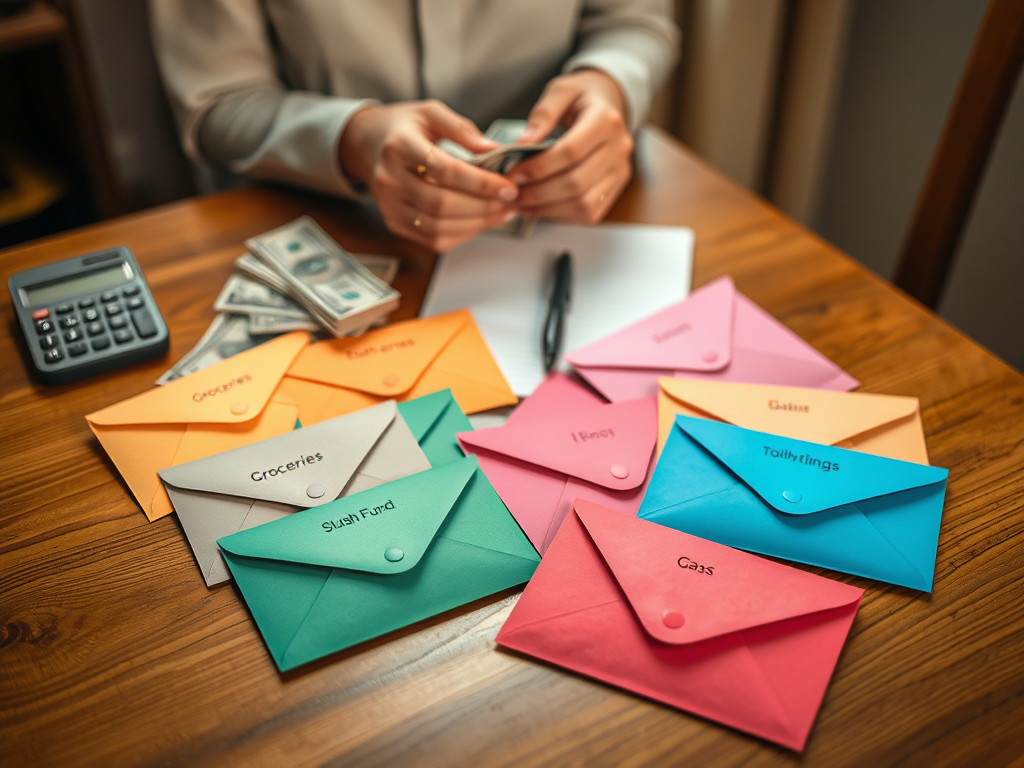
The cash detox. Do you go to the store and not even acknowledge the total when you hand over your card? Who cares how much you spend when you have a magical plastic card that takes care of it. Or how about when you completely forget about what was bought? Don’t even remember going to the store? You aren’t alone. I was really, very bad at not paying attention to the total.
Early in my personal finance journey I found Dave Ramsey. One of the basic tools he uses is the envelope system for budgeting. I went all in and used cash for everything that I could. When cash didn’t make sense, like paying a bill, I used checks. It was all planned out. I knew exactly how much I had to withdraw to fill all of my envelopes. Seriously, I went to the bank with the amount I was going to withdraw broken down by denomination.
Was paying cash at the gas station the easiest thing in the world? No, it was a little frustrating. Did it end up being one of the best moves I made? Yes. Definitely.
The first thing to know about a cash detox is that it’s a misnomer. We aren’t removing cash, we moving to nothing but cash. It helps start training your brain to pay attention to your money and your spending.
It forces you to be more aware of how much money you have left in an envelope. An envelope can also be thought of as a spending category. When I carried my envelopes around I saw I only had $5 left in my “slush fund”. If I went over budget in one category, it wasn’t as simple as moving numbers on my spreadsheet or notepad. I had to take that money out of another envelope.
It forces you to plan ahead. If you have several hundred dollars in the various envelopes you aren’t going to be carrying all of them with you at all times. I don’t need the grocery envelope if I’m not going grocery shopping. My envelope with $600 for that months grocery shopping will be kept safe at home. Where it can’t get stolen from, or fall out of, my purse.
It forces you to see your runaway spending, and helps you adapt your categories. Everyone and their uncle will have advice on what percentage of your income should go into which envelopes. Maybe that doesn’t work for your lifestyle. Most people would have their grocery and fast food money in the same envelope. It makes sense. It’s food. Yeah, that doesn’t work for me. After the third time I blew almost all of our food money on fast food I realized we needed to keep them in separate envelopes. Other envelopes that people like to combine with groceries; toiletries, paper products, over the counter medications. I like to keep them separate and buy them separately.
It forces you to pay attention to the total. While you could probably hand the whole envelope over to the cashier. That’s not really smart.
While it can’t force you to remember that you randomly bought a candy bar the last time you got gas. The money that is no longer in your envelope will remember.
This is why I recommend having a cash detox. It’s why I prefer using cash if I’m going to an event. The biggest thing cash can do is force you to stay in budget.
I am years into my personal finance journey and I’ve changed from physical envelopes to digital ones. I have a ridiculous number of savings accounts that act as envelopes and I track my spending using the free version of Goodbudget. I like having all of the accounts because, while the extra transferring is annoying. The money is protected from errors on my end.
An additional note – You do not have to go to Dave Ramsey to buy his envelopes. You can use mail envelopes to start with. You can use paper clips. Bull dog clips. My local discount store sells small snack Ziploc style bags that are perfect for carrying money. If you want something fancier and/or more durable, you can find reusable, budgeting envelopes on Amazon. Work with what you have access to until you have access to what you want to work with.
P.S. If this was useful my one-page Sinking Funds Tracker is in the shop, or you can tip on Ko-fi or PayPal. One tiny move is progress.
This post reflects my personal experience and opinions. I share our real-life money – rounded numbers, personal choices, (tiny) next steps. It is not financial advice. I’m not a financial advisor. Budgeting and money topics are shared for education and entertainment only. Your situation is unique; verify details before acting. Small steps count.
Personal experiences only—this isn’t professional advice. See Disclosures and Terms.






 Lacking a Nail
Leave a comment