
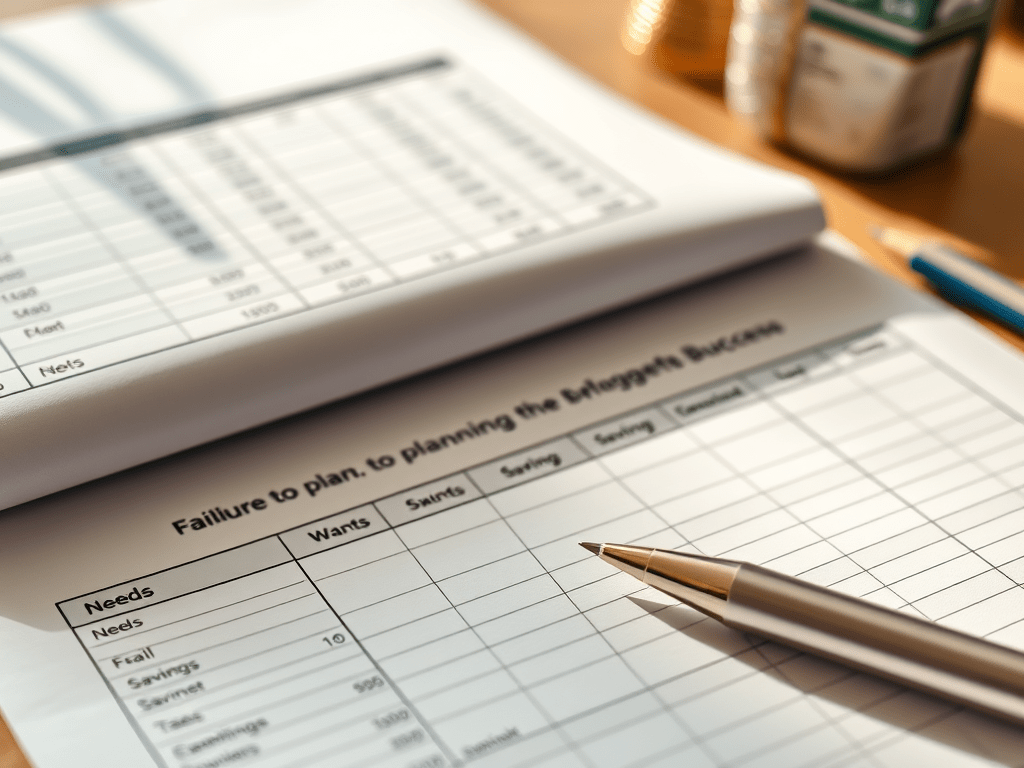
Zero based budgeting is just another way of saying “if you fail to plan, you plan to fail.” A zero based budget is determining where all anticipated income will go when setting up your budget. You can categories as broadly or as narrowly as you need.
For example you may want to have a very broad allocation, like the 50/30/20 approach to finance. Wherein you maintain that all needs will only take up 50% towards needs, 30% toward wants, and 20% to savings.
Through experience I have found I need to be more specific in my allocation. The first paycheck goes towards bills first, then monthly envelopes. Most of our checks are used up by then, but everything gets assigned. Even if it’s 32 cents, I decide where that 32 cents is going to go. The second paycheck is spent on annual bills that be due that month (I have no movement on my savings goals from March to May or November to December). When I don’t have annual bills it’s put towards specific savings goals, or desired purchases.
I’m able to approach finances this way because we have very little fluctuation in our monthly bills. If you have fluctuations in your bills I would suggest one two approaches.
Option A – look back, at least a year, and find the most expensive month for that bill. Use that amount in the budget.
Option B – take the last 12 months and average the bill. (Add all 12 months up and divide the total by 12.) You can set up a spreadsheet to a running average or you can track it and do it annually.
We also don’t have much fluctuation in income. Both my partner and I work 40-hour weeks at hourly pay. The only unknown is if we have overtime. Not everyone has the luxury of being able to estimate paychecks in advance. Again, two options that I would suggest.
Option A – look back at the last year and find the smallest paycheck. Use that amount for your budget.
Option B – average your income over the last 12 months. (Add all of the checks and divide by the number of checks).
If your work is seasonal you may want to look specifically at the previous years season. If your pay is steadily increasing you may want to set up a spreadsheet to track the rolling average.
The biggest trick to budgeting, whether you choose to do zero based or close to it. Budgeting doesn’t just happen when you are guessing what your pay will be and what the bills will cost.
Update the budget when you find out what your income is. Update it again when you find out what each of your bills are. Have a list of the next three to five things you’re going to put any extra money towards.
Budgets and goals fall apart in two places. Firstly, failure to update when you have new information. Secondly, failure to plan what you’re going to do when you have extra money.
P.S. If this was useful my one-page Sinking Funds Tracker is in the shop, or you can tip on Ko-fi or PayPal. One tiny move is progress.
This post reflects my personal experience and opinions. I share our real-life money – rounded numbers, personal choices, (tiny) next steps. It is not financial advice. I’m not a financial advisor. Budgeting and money topics are shared for education and entertainment only. Your situation is unique; verify details before acting. Small steps count.
Personal experiences only—this isn’t professional advice. See Disclosures and Terms.






 Lacking a Nail
Leave a comment